Gender and Symbolism in Classical Arabic Literature: Female Representation in Al-Jahiz's Writings
Article Sidebar
Main Article Content
Abstract
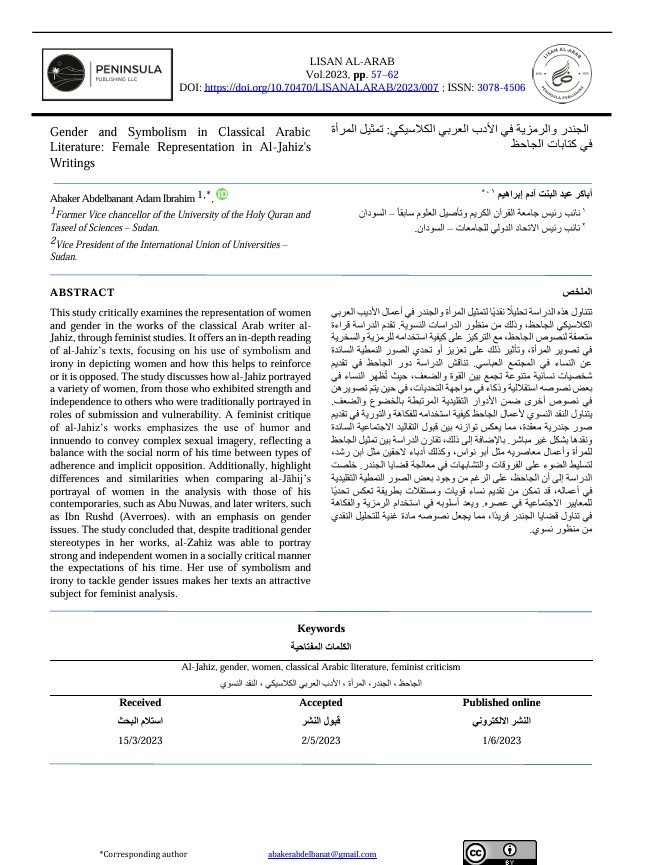
This study critically examines the representation of women and gender in the works of the classical Arab writer al-Jahiz, through feminist studies. It offers an in-depth reading of al-Jahiz’s texts, focusing on his use of symbolism and irony in depicting women and how this helps to reinforce or it is opposed. The study discusses how al-Jahiz portrayed a variety of women, from those who exhibited strength and independence to others who were traditionally portrayed in roles of submission and vulnerability. A feminist critique of al-Jahiz’s works emphasizes the use of humor and innuendo to convey complex sexual imagery, reflecting a balance with the social norm of his time between types of adherence and implicit opposition. Additionally, highlight differences and similarities when comparing al-Jāhij’s portrayal of women in the analysis with those of his contemporaries, such as Abu Nuwas, and later writers, such as Ibn Rushd (Averroes). with an emphasis on gender issues. The study concluded that, despite traditional gender stereotypes in her works, al-Zahiz was able to portray strong and independent women in a socially critical manner the expectations of his time. Her use of symbolism and irony to tackle gender issues makes her texts an attractive subject for feminist analysis.
Article Details

This work is licensed under a Creative Commons Attribution 4.0 International License.