التصورات الخاطئة عن الزواج كمؤشر للتنبؤ بارتفاع معدلات الطلاق في محافظة كركوك
الشريط الجانبي للمقالة
محتوى المقالة الرئيسي
الملخص
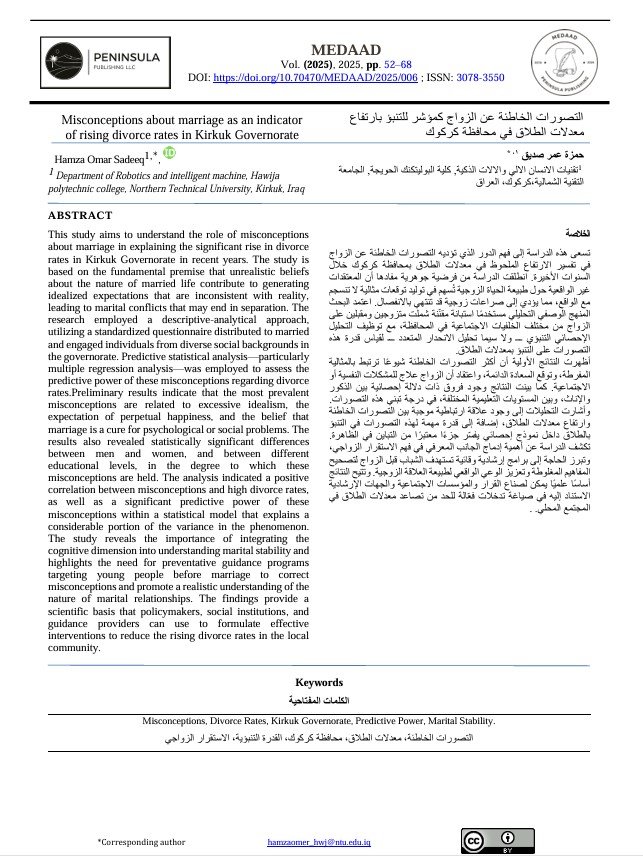
تسعى هذه الدراسة إلى فهم الدور الذي تؤديه التصورات الخاطئة عن الزواج في تفسير الارتفاع الملحوظ في معدلات الطلاق بمحافظة كركوك خلال السنوات الأخيرة. انطلقت الدراسة من فرضية جوهرية مفادها أن المعتقدات غير الواقعية حول طبيعة الحياة الزوجية تُسهم في توليد توقعات مثالية لا تنسجم مع الواقع، مما يؤدي إلى صراعات زوجية قد تنتهي بالانفصال. اعتمد البحث المنهج الوصفي التحليلي مستخدمًا استبانة مقنّنة شملت متزوجين ومقبلين على الزواج من مختلف الخلفيات الاجتماعية في المحافظة، مع توظيف التحليل الإحصائي التنبؤي ـــ ولا سيما تحليل الانحدار المتعدد ـــ لقياس قدرة هذه التصورات على التنبؤ بمعدلات الطلاق.
أظهرت النتائج الأولية أن أكثر التصورات الخاطئة شيوعًا ترتبط بالمثالية المفرطة، وتوقع السعادة الدائمة، واعتقاد أن الزواج علاج للمشكلات النفسية أو الاجتماعية. كما بينت النتائج وجود فروق ذات دلالة إحصائية بين الذكور والإناث، وبين المستويات التعليمية المختلفة، في درجة تبني هذه التصورات. وأشارت التحليلات إلى وجود علاقة ارتباطية موجبة بين التصورات الخاطئة وارتفاع معدلات الطلاق، إضافة إلى قدرة مهمة لهذه التصورات في التنبؤ بالطلاق داخل نموذج إحصائي يفسّر جزءًا معتبرًا من التباين في الظاهرة.تكشف الدراسة عن أهمية إدماج الجانب المعرفي في فهم الاستقرار الزواجي، وتبرز الحاجة إلى برامج إرشادية وقائية تستهدف الشباب قبل الزواج لتصحيح المفاهيم المغلوطة وتعزيز الوعي الواقعي لطبيعة العلاقة الزوجية. وتتيح النتائج أساسًا علميًا يمكن لصناع القرار والمؤسسات الاجتماعية والجهات الإرشادية الاستناد إليه في صياغة تدخلات فعّالة للحد من تصاعد معدلات الطلاق في المجتمع المحلي..
تفاصيل المقالة

هذا العمل مرخص بموجب Creative Commons Attribution 4.0 International License.