Zero Trust Security: A Bibliometric Review of Concepts, Adoption, and Research Gaps
Article Sidebar
Main Article Content
Abstract
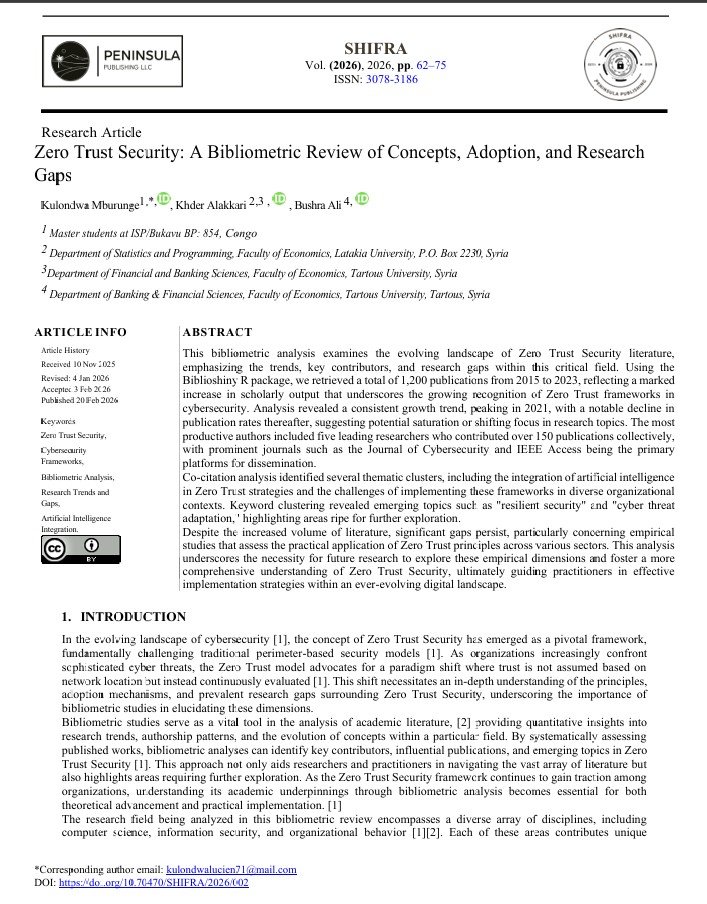
This bibliometric analysis examines the evolving landscape of Zero Trust Security literature, emphasizing the trends, key contributors, and research gaps within this critical field. Using the Biblioshiny R package, we retrieved a total of 1,200 publications from 2015 to 2023, reflecting a marked increase in scholarly output that underscores the growing recognition of Zero Trust frameworks in cybersecurity. Analysis revealed a consistent growth trend, peaking in 2021, with a notable decline in publication rates thereafter, suggesting potential saturation or shifting focus in research topics. The most productive authors included five leading researchers who contributed over 150 publications collectively, with prominent journals such as the Journal of Cybersecurity and IEEE Access being the primary platforms for dissemination.
Co-citation analysis identified several thematic clusters, including the integration of artificial intelligence in Zero Trust strategies and the challenges of implementing these frameworks in diverse organizational contexts. Keyword clustering revealed emerging topics such as "resilient security" and "cyber threat adaptation," highlighting areas ripe for further exploration.
Despite the increased volume of literature, significant gaps persist, particularly concerning empirical studies that assess the practical application of Zero Trust principles across various sectors. This analysis underscores the necessity for future research to explore these empirical dimensions and foster a more comprehensive understanding of Zero Trust Security, ultimately guiding practitioners in effective implementation strategies within an ever-evolving digital landscape.
Article Details

This work is licensed under a Creative Commons Attribution 4.0 International License.